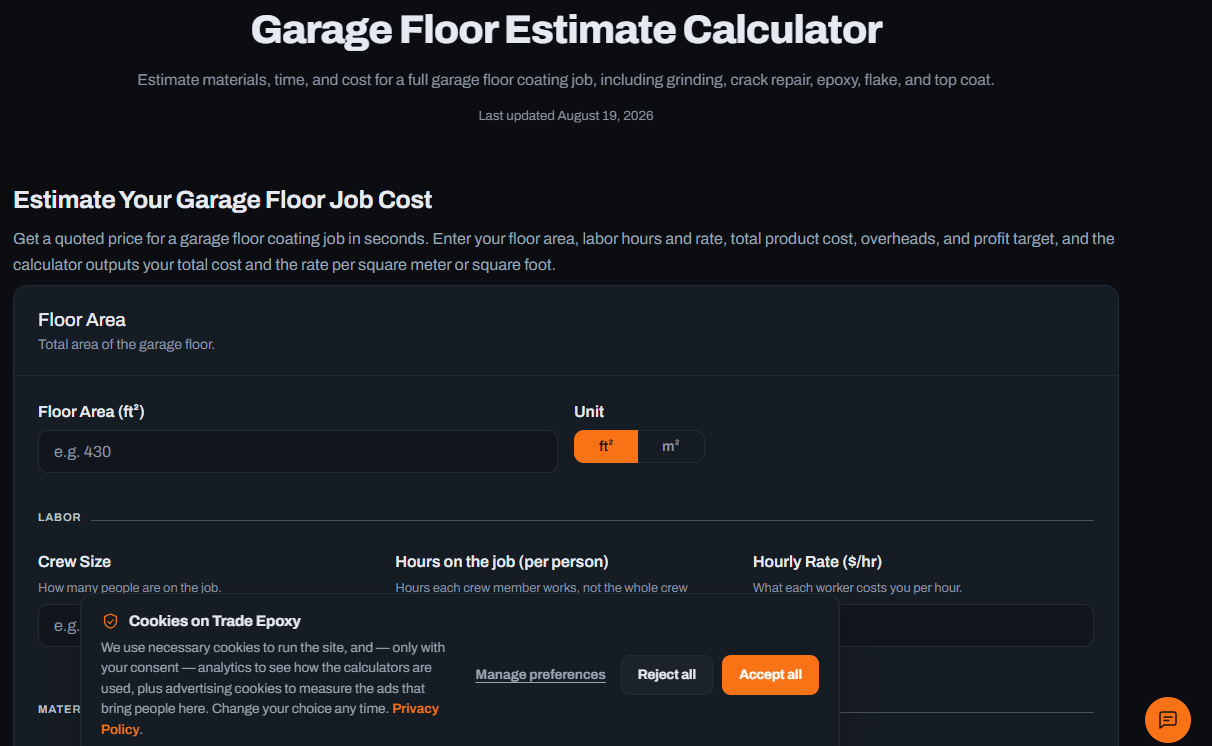
A profitable flooring job can go wrong before installation even begins if the estimate is based on rough assumptions. A garage floor estimate calculator can help contractors organize area, material needs, labor, and related costs before a quote is finalized. The real value, however, comes from combining calculator results with accurate site measurements and product-specific information.
Estimating should reflect the actual job rather than a standard price copied from a previous project. Slab condition, repairs, coating layers, broadcast media, crew time, travel, and return visits can all change the final cost.
Start With Accurate Floor Measurements
Every estimate begins with area. Measure the actual coated footprint and account for sections that will not receive material. Irregular rooms may need to be divided into smaller rectangles so the total can be calculated more reliably.
Once the area is known, a resin mixing ratio calculator can help split a planned batch into the correct amounts of Part A and Part B. This is a different calculation from determining how much product to buy, so contractors should avoid treating coverage and mixing ratio as the same thing.
Build the Coating System Layer by Layer
A floor system is rarely one coat. Depending on the specification, the job may involve primer, base coat, flakes or quartz, grout coat, and a final protective layer.
Each product can have a different coverage rate and package size. Estimating every layer separately gives a clearer material total than applying one average coverage figure to the entire system.
Technical data sheets should be used for the coverage rate and mixing information of the exact product being installed. Default calculator values can be helpful for planning, but the manufacturer’s current figures should guide final ordering.
Allow for Real-World Material Use
Coverage figures are useful, but actual consumption can change with substrate porosity, surface profile, application thickness, and installation technique. Rough or highly absorbent concrete may use more material than a dense slab.
Broadcast systems add another variable. Full-flake and quartz floors require enough media to achieve the intended broadcast, and the amount needed should be calculated separately from liquid coating volume.
A sensible estimate also accounts for package sizes. Contractors cannot always order the exact mathematical volume required, so quantities may need to be rounded up to complete kits, bags, or boxes.
Include Preparation and Repair Work
Material calculations are only part of the quote. Grinding, coating removal, crack repair, joint work, patching, and moisture-related preparation can add meaningful labor and consumable costs.
A site inspection can reveal conditions that photographs or customer descriptions miss. Oil contamination, soft concrete, previous sealers, and hidden repairs may affect both production time and tooling.
Instead of burying these costs inside a single square-foot rate, contractors can estimate them as specific parts of the job. That makes the quote easier to explain and update if the scope changes.
Calculate Labor From Production, Not Guesswork
Labor estimates should reflect how long each stage is likely to take. Preparation may require more crew hours than coating application, especially on damaged or previously coated slabs.
Consider setup, masking, grinding, vacuuming, repairs, mixing, application, broadcast, scraping, cleanup, and return visits. Small tasks can add several hours when viewed across the entire project.
Tracking actual production rates from completed jobs can improve future estimates. Over time, contractors can replace generic assumptions with numbers that reflect their own crew and equipment.
Do Not Forget Overhead and Margin
Material plus labor does not equal a sustainable selling price. Insurance, vehicles, equipment wear, fuel, office costs, marketing, and other overhead still have to be covered.
Margin should be calculated deliberately rather than added as an arbitrary percentage at the end. Contractors need to understand the difference between markup and profit margin because the two do not produce the same selling price.
A strong estimate shows what the project costs the business before determining what the customer should be quoted.
Check the Numbers Before Sending the Quote
Before sending an estimate, review floor area, coverage rates, package sizes, labor hours, repair allowances, overhead, and margin. A small mistake in one input can affect several later calculations.
It is also worth saving the assumptions used in the quote. If the customer changes the floor size, finish, or system, the estimate can then be revised without rebuilding it from memory.
Conclusion
Accurate epoxy estimating is not about finding one perfect formula. It is about connecting measurements, material coverage, mixing requirements, preparation, labor, overhead, and margin into one repeatable process.
For contractors who want trade-specific tools for material sizing, estimating, mixing, and pricing, tradeepoxy.com brings these calculations together in one browser-based resource. Using calculators alongside current product data and real site information can make quoting more consistent while reducing avoidable guesswork.